Taxes
Tax& relax
Pay what you owe, not a penny more. And know why.
5 tools

Photo: DPP Business and Tax, Flickr, CC BY 2.0
Tools
The tax slice
Know what to set aside for tax
See how much to put aside and when to pay, platform by platform.
Crypto, decoded
Calculate tax on your gains
Work out the tax on your crypto and investment gains and fill in the right form.
No scary mail
Understand your tax letter
Understand the letter you received and reply before the deadline.
Pass it on
Estimate inheritance tax
See the tax due on an inheritance or a gift and the legal ways to reduce it.
Guides

Taxes
How much to set aside for 1099 taxes in 2026, by income level
For a single filer with no other income, federal tax on 2026 1099 profit comes to about 17% at $30,000, 20% at $60,000, 22% at $100,000 and 25% at $150,000, self-employment tax included. Set aside that share of your profit, plus your state’s income tax, and more if you also have a salaried job.
Photo: imglighting, Flickr, CC BY 2.0

Taxes
Car loan interest deduction: who qualifies and what it’s worth
For 2025 through 2028 you can deduct up to $10,000 a year of interest on a loan for a new car, SUV, pickup, van or motorcycle whose final assembly took place in the United States, even if you take the standard deduction. The deduction falls by $200 for every $1,000 (or part of $1,000) of modified AGI above $100,000, or $200,000 on a joint return.
Photo: Jack Wallsten, Flickr, CC BY 2.0

Taxes
CP2000 notice from the IRS: what it means and how to reply
A CP2000 notice means the income or payments that employers, banks or brokers reported to the IRS do not match your tax return, so the IRS proposes a change: it is not a bill, and the change can raise, lower or leave your tax unchanged. You must reply by the date printed on the notice, saying whether you agree or disagree.
Photo: markus119, Flickr, CC BY 2.0
Taxes
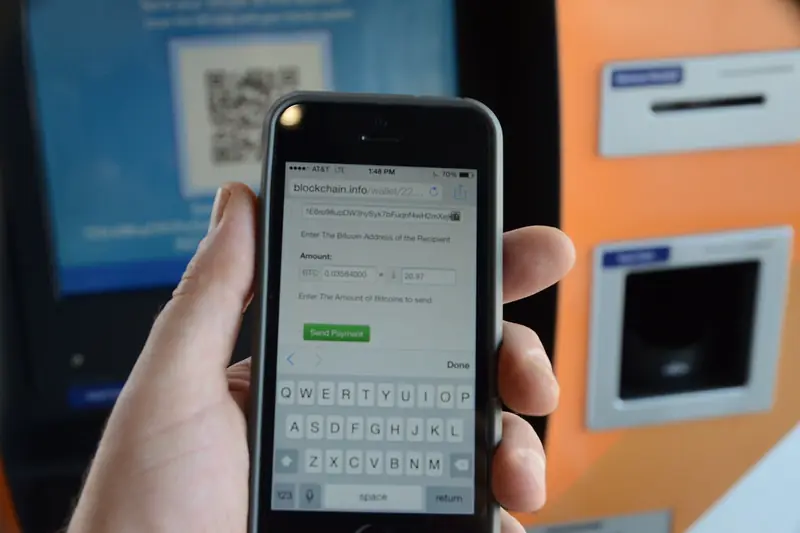
Crypto tax rate 2026: 0%, 15% or 20%, or your income tax rate
In 2026, profit on crypto you held for more than a year is taxed at 0%, 15% or 20% depending on your taxable income, with the 0% rate up to $49,450 for single filers and $98,900 for married couples filing jointly. Crypto held a year or less is taxed like your salary, at your ordinary income tax rate.
Photo: btckeychain, Flickr, CC BY 2.0

Taxes
DoorDash taxes 2026: what Dashers owe and how much to set aside
As a Dasher you are taxed on profit, not on payouts: gross earnings minus mileage and other costs, then 15.3% self-employment tax on most of that profit, plus income tax. For 2026, mileage is worth 72.5 cents a mile through June 30 and 76 cents from July 1, so many full-time Dashers end up owing mostly self-employment tax.
Photo: Eric Gropp, Flickr, CC BY 2.0

Taxes
HSA tax savings: 2026 and 2027 limits and what you really save
For 2026 you can put up to $4,400 into a health savings account with self-only coverage, or $8,750 with family coverage, plus $1,000 if you are 55 or older, and you have until April 15, 2027 to do it. In the 22% bracket, a full family contribution through payroll saves about $2,594 in federal income tax and payroll tax.
Photo: mckaysavage, Flickr, CC BY 2.0

Taxes
No tax on overtime: how much you’ll really save on 2026 taxes
No tax on overtime is a federal income tax deduction for the premium part of your overtime pay, the extra half in time-and-a-half, capped at $12,500 a year ($25,000 on a joint return) for 2025 through 2028. It does not make your whole overtime check tax free: Social Security and Medicare tax still apply, and your state may still tax it.
Photo: photosteve101, Flickr, CC BY 2.0
Taxes
No tax on tips: who qualifies and what you’ll save for 2026
For 2025 through 2028, workers in a listed tipped occupation can deduct up to $25,000 of qualified tips a year from federal taxable income, whether or not they itemize. The tips are still subject to Social Security and Medicare tax, and the deduction shrinks once modified AGI passes $150,000 ($300,000 for joint filers).
Photo: photosteve101, Flickr, CC BY 2.0

Taxes
Quarterly estimated taxes: what to pay by January 15, 2027
The last estimated tax payment for 2026 is due January 15, 2027. To avoid the underpayment penalty, your four payments plus any withholding must reach the smaller of 90% of your 2026 tax or 100% of your 2025 tax (110% if your 2025 AGI was over $150,000).
Photo: DPP Business and Tax, Flickr, CC BY 2.0
Taxes
Standard deduction vs itemized for 2026: the new math to compare
For 2026, itemize only if your itemized deductions are larger than your standard deduction ($16,100 single, $32,200 married filing jointly, $24,150 head of household) plus the up to $1,000 ($2,000 joint) of cash donations you can now deduct without itemizing. The higher $40,400 cap on state and local taxes makes itemizing worth checking again for homeowners in high-tax states.
Photo: photosteve101, Flickr, CC BY 2.0