Crypto tax rate 2026: 0%, 15% or 20%, or your income tax rate
In 2026, profit on crypto you held for more than a year is taxed at 0%, 15% or 20% depending on your taxable income, with the 0% rate up to $49,450 for single filers and $98,900 for married couples filing jointly. Crypto held a year or less is taxed like your salary, at your ordinary income tax rate.
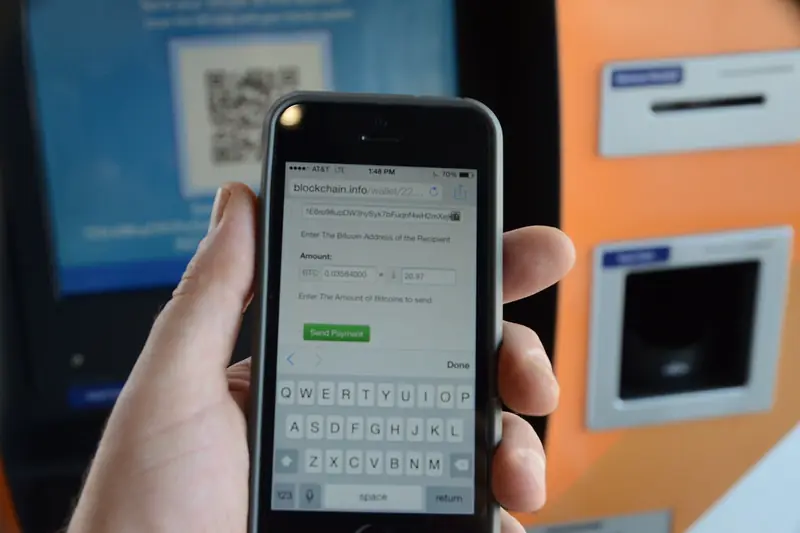
Photo: btckeychain, Flickr, CC BY 2.0
The IRS taxes crypto as property, so the rate depends on two things: how long you held the coin and your total taxable income. Find the rate on your own crypto gains before you sell more this year.
The 2026 long-term rates
For crypto held more than one year, the gain sits on top of your other taxable income and is taxed by band:
| Filing status | 0% up to | 15% up to | 20% above |
|---|---|---|---|
| Single | $49,450 | $545,500 | $545,500 |
| Married filing jointly | $98,900 | $613,700 | $613,700 |
| Head of household | $66,200 | $579,600 | $579,600 |
| Married filing separately | $49,450 | $306,850 | $306,850 |
$49,450
Taxable income means after the standard deduction ($16,100 single, $32,200 joint in 2026). People with significant investment income may also owe the net investment income tax. Check which band your gain falls into.
Find my crypto tax rateShort-term gains: taxed like wages
Crypto held for a year or less is a short-term gain, taxed as ordinary income at graduated rates. For a single filer in 2026 the brackets are 10% up to $12,400 of taxable income, 12% up to $50,400, 22% up to $105,700, then 24%, 32%, 35% and 37%.
The holding period counts from the day after you acquire the coin. Selling a day too early can turn a 15% gain into a 22% or 24% one. See what waiting past one year would save before you sell a recent purchase.
Compare selling now and after one yearFour examples for 2026
| Profile | Taxable income before the gain | Gain | Tax on the gain |
|---|---|---|---|
| Single, held 2 years | $60,000 | $10,000 | $1,500 (all at 15%) |
| Single, held 8 months | $60,000 | $10,000 | $2,200 (at 22%) |
| Student, single, held 3 years | $20,000 | $20,000 | $0 (total $40,000, under $49,450) |
| Married jointly, held 2 years | $90,000 | $30,000 | $3,165 ($8,900 at 0%, $21,100 at 15%) |
The married couple shows how the bands stack: their other income uses $90,000 of the $98,900 zero band, so only the first $8,900 of the gain is tax free. A year with low income, such as a gap year or early retirement, is the cheapest time to realize long-term gains. Plan the year to take your gains with your own income.
Plan when to take my gainsWhat is taxable, and what is not
The IRS digital asset question on Form 1040 is a "Yes" if you:
- sold or exchanged crypto for dollars or for another digital asset;
- used crypto to pay for goods or services, or to pay a transfer fee;
- received crypto as payment, as a reward, or through mining, staking or an airdrop after a hard fork (taxed as income when received).
It is a "No" if you only held crypto, bought it with dollars, or moved it between wallets you control without paying a fee in crypto. Losses help: they offset gains, up to $3,000 of net loss a year comes off other income, and the rest carries forward. Test which of your transactions are taxable.
Check my taxable transactionsAn example of losses at work: in 2026 you sell one coin for an $8,000 gain and another for an $11,000 loss. The loss wipes out the gain and leaves a $3,000 net loss, which you deduct from your salary. In the 22% bracket, that deduction cuts your tax by $660, on top of the tax you no longer owe on the $8,000. A larger loss is not wasted: whatever is above $3,000 carries forward to 2027 and later years, until it is used up.
Form 1099-DA and how to report
Brokers must report gross proceeds of digital asset sales from January 1, 2025, and basis for certain transactions from January 1, 2026, on Form 1099-DA. So for 2026 the IRS will see your proceeds and, for many trades, what you paid. Report every sale or exchange on Form 8949, whether it made a gain or a loss; staking and mining income goes on Schedule 1, and crypto business income on Schedule C.
Check my 1099-DA figuresKeep a record of each purchase, sale and the dollar value of crypto you received. Beware of letters asking you to "register" your crypto through a QR code: the IRS says it requires no such registration and calls them a scam. Get your 2026 crypto tax worked out form by form.
Prepare my Form 8949Frequently asked questions
How much tax do you pay on crypto in 2026?
It depends on how long you held it. Held more than a year: 0%, 15% or 20% of the gain, based on your taxable income. Held a year or less: your ordinary income tax rate, from 10% to 37%.
Is crypto to crypto taxable?
Yes. The IRS treats exchanging one digital asset for another as a disposal, so it is taxable and must be reported, like selling for dollars.
Do I pay tax on crypto if I don’t sell?
Not on price gains. Holding crypto, buying it with dollars, or moving it between your own wallets is not taxable, unless you pay a fee in crypto. Crypto received as income, from staking or mining for example, is taxable when you receive it.
Can crypto losses reduce my taxes?
Yes. Losses offset gains, and up to $3,000 of net capital loss a year ($1,500 married filing separately) can be deducted against other income. The rest carries forward to later years.
Sources
- IRS, Digital assets, accessed November 22, 2026
- IRS, Topic no. 409, Capital gains and losses, accessed November 22, 2026
- IRS, Revenue Procedure 2025-32, tax year 2026 inflation adjustments (sections 4.01 and 4.03), accessed November 22, 2026
Read next
 Taxes
How much to set aside for 1099 taxes in 2026, by income level
Photo: imglighting, Flickr, CC BY 2.0
 Taxes
Car loan interest deduction: who qualifies and what it’s worth
Photo: Jack Wallsten, Flickr, CC BY 2.0
 Taxes
CP2000 notice from the IRS: what it means and how to reply
Photo: markus119, Flickr, CC BY 2.0