CP2000 notice from the IRS: what it means and how to reply
A CP2000 notice means the income or payments that employers, banks or brokers reported to the IRS do not match your tax return, so the IRS proposes a change: it is not a bill, and the change can raise, lower or leave your tax unchanged. You must reply by the date printed on the notice, saying whether you agree or disagree.

Photo: markus119, Flickr, CC BY 2.0
Most CP2000 notices come from a form you forgot or a figure the IRS read without context, such as a 1099-B without your purchase price. Decode your letter and its deadline before you write anything back.
What a CP2000 is
The IRS matches your return against the forms other people file about you: W-2s from employers, 1099-INT and 1099-DIV from banks, 1099-B and 1099-DA from brokers, 1099-NEC and 1099-K from clients and platforms. When something does not match, it sends a CP2000 that shows:
- the income or payment it received and what you reported;
- the proposed change to your tax, with any penalty and the interest so far;
- a response form and the date by which to reply.
Interest keeps running on any tax you finally owe until it is paid, and penalties may apply. Find out what the IRS is asking you for in plain words.
Understand my CP2000Check the notice line by line
Compare each item with your own records:
- Is the income yours? A 1099 can carry the wrong Social Security number or duplicate another form.
- Did you report it elsewhere? Income put on Schedule C instead of line 1, or a joint account reported by your spouse, can look missing.
- Is the cost basis there? For a stock or crypto sale, the IRS may only see gross proceeds.
- Is the tax computed right? Long-term gains, deductions and credits change the result.
A classic case: a broker reports $20,000 of sale proceeds but no basis, and you had paid $18,500. If the IRS treats the whole $20,000 as gain, at 22% the proposed tax is $4,400; on the real $1,500 gain it is $330. Check whether the proposed tax is right before you agree to it.
Check the IRS figuresHow to reply: agree or disagree
If you agree, follow the instructions on the notice: sign the response form and pay or set up a payment plan. You do not need to amend your return unless you have other income, credits or expenses to report.
If you disagree, fully or partly, complete and sign the response form, say what you disagree with and why, and attach your proof: the trade confirmation with the purchase price, a corrected 1099, a W-2, a statement showing where you already reported the income.
Prepare my replyYou can send it three ways: upload it with the IRS document upload tool (JPG, PNG or PDF, with the access code on the notice), which is the fastest; fax it to the number for the IRS office shown at the top left of the notice; or mail it to the address in the top left corner of the first page. Get your reply written with the right documents.
Get my reply letterDeadlines, and what comes next
The response date is printed on your notice. If you cannot gather the documents in time, ask the IRS for more time before that date, and authorize a tax professional with Form 2848 if someone helps you. The Taxpayer Advocate Service offers free help when a case is stuck.
If you do not reply, the IRS may send another notice and a bill. If it maintains the change, it can send a statutory notice of deficiency (CP3219A). That one has a hard deadline: a petition to the Tax Court must be filed by the 90th day after the notice, or the 150th day if it is addressed to you outside the United States, and the deadline cannot be extended.
90 days
Track the deadline on each IRS letter you receive.
Check my response deadlineAvoid the next one
- Wait for every form before filing, and include any corrected 1099 you receive.
- Report gross proceeds and basis for every sale on Form 8949, even when the broker did not send the basis.
- Keep the income on the right line, and keep records that show where each 1099 went.
- Only share personal information on official .gov sites; the IRS also has a page to report fake IRS emails and messages.
Freelancers are frequent recipients when a client’s 1099-NEC is missed: see how much to set aside for 1099 taxes. Crypto sellers can check the 2026 crypto tax rate. Read any IRS notice in two minutes when it lands.
Decode another IRS noticeFrequently asked questions
Is a CP2000 notice a bill?
No. It is a proposed change to your return based on information from third parties. Your response may be required, and the IRS may send a bill only later if the change stands.
How long do I have to respond to a CP2000?
Until the response date printed on your notice. If you need more time, you can ask the IRS for it, and you can authorize a tax professional to deal with it using Form 2848.
Should I file an amended return for a CP2000?
Only if the notice is correct and you also have other income, credits or expenses to report. In that case, complete Form 1040-X, write CP2000 at the top, and send it with your response. Otherwise, the response form is enough.
What happens if I ignore a CP2000?
The IRS may send another notice and a bill. A later statutory notice of deficiency (CP3219A) gives a fixed time, usually 90 days, to petition the Tax Court, and replying to the IRS does not extend it.
Sources
- IRS, Understanding your CP2000 series notice, accessed November 22, 2026
- IRS, Understanding your CP2000 notice, accessed November 22, 2026
- United States Tax Court, Starting a case, accessed November 22, 2026
Read next
 Taxes
How much to set aside for 1099 taxes in 2026, by income level
Photo: imglighting, Flickr, CC BY 2.0
 Taxes
Car loan interest deduction: who qualifies and what it’s worth
Photo: Jack Wallsten, Flickr, CC BY 2.0
 Taxes
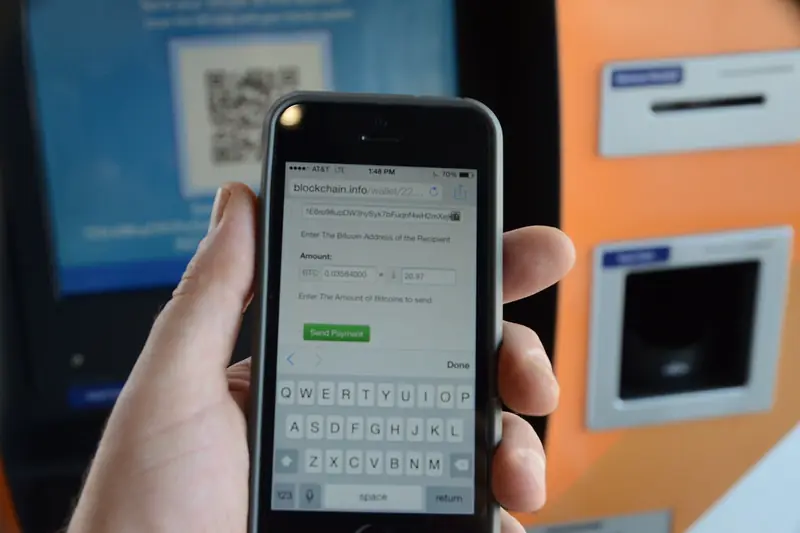
Crypto tax rate 2026: 0%, 15% or 20%, or your income tax rate
Photo: btckeychain, Flickr, CC BY 2.0