How much should a family of 4 spend on groceries? About $1,393
According to the USDA food plans for October 2026, a family of four with two children aged 6 to 11 spends $1,024.60 a month on groceries on the Thrifty plan, $1,129 on the Low-Cost plan, $1,392.70 on the Moderate-Cost plan and $1,684.60 on the Liberal plan. Those figures assume every meal and snack is made at home, so they are a ceiling to compare your receipts with, not a target to reach.
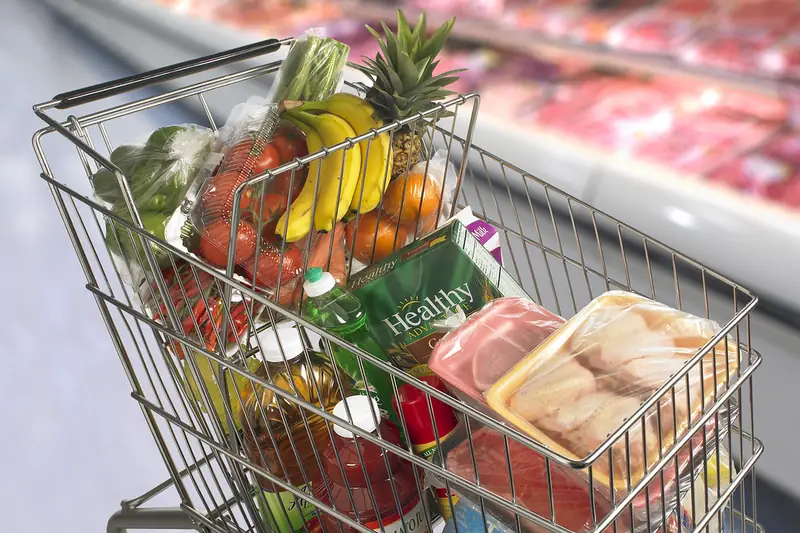
Photo: USDAgov, Flickr, Domaine public
The USDA updates these costs every month with food inflation, so they are the most reliable yardstick for a family grocery budget. Compare your grocery budget with the usual one in two minutes.
The four USDA plans for a family of four
| USDA food plan, October 2026 | Family of four, per month | Per week (about) |
|---|---|---|
| Thrifty | $1,024.60 | $236 |
| Low-Cost | $1,129.00 | $261 |
| Moderate-Cost | $1,392.70 | $321 |
| Liberal | $1,684.60 | $389 |
$1,392.70
The reference family is a man and a woman aged 19 to 50 (20 to 50 for the Thrifty plan) and two children aged 6 to 8 and 9 to 11. The USDA converts weekly costs to monthly ones by multiplying by 4.333. See which plan your spending matches.
Compare my spending with the USDA plansYour family is not the reference family
The cost depends on each person’s age and sex, and on household size. Some October 2026 monthly costs per person on the Moderate-Cost plan:
| Person | Moderate-Cost plan, per month |
|---|---|
| Child aged 2 to 3 | $207.70 |
| Child aged 9 to 11 | $351.20 |
| Boy aged 14 to 18 | $403.70 |
| Woman aged 19 to 50 | $337.00 |
| Man aged 19 to 50 | $398.90 |
Then the USDA adjusts the total for size: add 20% for one person, 10% for two, 5% for three, nothing for four, take off 5% for five or six and 10% for seven or more. A family with two teenagers therefore spends more than the reference family, and a family with toddlers less. Work out the budget for your exact household.
Build my household’s grocery targetWhy your budget keeps creeping up
Grocery prices still rise, but more slowly than restaurant prices. The USDA Economic Research Service reports that in September 2026 food-at-home prices were 1.8% higher than a year earlier, while food away from home was up 3.5%. It forecasts food-at-home prices to rise 2.3% over 2026 and about 1.0% in 2027, with a wide margin of uncertainty for next year.
Two consequences for a family budget. First, the plan figures above move every month, so a budget set a year ago is already a little low: compare with the current month’s report, not last year’s. Second, every meal moved from takeout to home cooking now saves more than it did, because the gap between the two keeps widening. A family that replaces two takeout dinners a week with home-cooked meals at Moderate-Cost level frees up part of its restaurant spending without changing its grocery plan.
Update my budget for this month’s pricesIf you track spending in an app or a spreadsheet, review the grocery line every three months against the latest USDA report. A gap that grows quarter after quarter usually signals a change in habits worth a look.
Couples and single people
| Household, adults 19 to 50 | Thrifty | Moderate-Cost |
|---|---|---|
| Couple | about $631 | about $809 |
| Single woman | about $305 | about $404 |
| Single man | about $383 | about $479 |
These are the individual costs plus the 10% or 20% size adjustment. If your receipts are well above the Moderate-Cost line, the gap often comes from what you buy rather than how much you eat, such as ready meals, branded products or food thrown away. Find where your grocery money goes.
See where my grocery money goesHow to bring the bill down
- Measure first. Add up two months of grocery receipts, without restaurants, and divide by two.
- Pick your plan line in the tables above and compare.
- Plan the week’s meals before shopping, around what you already have.
- Switch staples to store brands, one category at a time.
- Cook in batches and freeze portions, which cuts both waste and takeout.
Moving from the Moderate-Cost to the Low-Cost level for a family of four is worth $263.70 a month in October 2026, or about $3,164 a year. Get cheaper meal plans for your family.
Get my cheaper meal planIf the budget is too tight
The Thrifty Food Plan is also the basis of SNAP: the plan for June sets the maximum SNAP allotment for a household of four for the next year. If your income is low, SNAP benefits can cover part of the grocery bill. Check whether you can get help with food costs before cutting further.
Check my food help optionsFrequently asked questions
What is a reasonable grocery budget for a family of 4?
Between $1,024.60 and $1,684.60 a month in October 2026, depending on the USDA plan, for a couple aged 19 to 50 with children aged 6 to 8 and 9 to 11, with all meals made at home. The Moderate-Cost plan is $1,392.70.
How much should a couple spend on groceries per month?
About $631 on the Thrifty plan and $809 on the Moderate-Cost plan for two adults aged 19 to 50 in October 2026, after the USDA’s 10% adjustment for a two-person household.
How much should one person spend on groceries a month?
For one adult the USDA adds 20% to the individual cost. On the Moderate-Cost plan in October 2026 that is about $404 for a woman aged 19 to 50 and $479 for a man of the same age.
What is the USDA Thrifty Food Plan used for?
It is the cheapest of the four plans and the basis of SNAP benefits: the June Thrifty Food Plan sets the maximum SNAP allotment for a household of four for the following year.
Sources
- USDA, Official USDA Thrifty Food Plan: U.S. Average, October 2026, accessed November 22, 2026
- USDA, Official USDA Food Plans: Cost of Food at Home at Three Levels, U.S. Average, October 2026, accessed November 22, 2026
- USDA, Food Plans: Monthly Cost of Food Reports, accessed November 22, 2026
- USDA Economic Research Service, Food Price Outlook, Summary Findings (October 2026), accessed November 22, 2026
Read next
 Everyday money
50/30/20 rule: how to split your take-home pay, with examples
Photo: Amsterdam free photos & pictures of the Dutch city, Flickr, CC0
 Work
1099-NEC threshold 2026: $2,000, and why your invoices matter
Photo: Boston Public Library, Flickr, CC BY 2.0
 Taxes
How much to set aside for 1099 taxes in 2026, by income level
Photo: imglighting, Flickr, CC BY 2.0