50/30/20 rule: how to split your take-home pay, with examples
The 50/30/20 rule splits your take-home pay into three parts: 50% for needs such as rent, groceries and insurance, 30% for wants, and 20% for savings and extra debt payments. On $4,000 a month after tax, that is $2,000 for needs, $1,200 for wants and $800 to save.

Photo: Amsterdam free photos & pictures of the Dutch city, Flickr, CC0
The rule is a starting split, not a verdict on your spending. Its value is that it fits on a sticky note and tells you, every month, whether the money is going where you meant it to. Split your income with the 50/30/20 rule and see where it goes.
The split at three income levels
| Take-home pay per month | Needs (50%) | Wants (30%) | Savings (20%) |
|---|---|---|---|
| $3,000 | $1,500 | $900 | $600 |
| $4,000 | $2,000 | $1,200 | $800 |
| $5,000 | $2,500 | $1,500 | $1,000 |
$800
Start from take-home pay: the amount that actually reaches your account. Money already taken from your paycheck for a 401(k) counts as savings, so add it to the 20% rather than ignoring it. Build your own split from your paycheck.
Build my 50/30/20 budgetWhat counts as a need, a want, a saving
Needs (50%): rent or mortgage, utilities, groceries, insurance, transport to work, minimum debt payments, childcare. These are the bills you would still pay if you lost your job tomorrow.
Wants (30%): restaurants and takeout, streaming and subscriptions, travel, hobbies, upgrades beyond the basic version of a need.
Savings (20%): emergency fund, retirement contributions, investing, and any debt payment above the minimum.
See my needs, wants and savingsThe line between need and want is where most budgets slip. A basic phone plan is a need; the newest phone on a monthly plan is mostly a want. Groceries are a need; the gap between a home-cooked week and takeout is a want. For reference, the USDA’s October 2026 food plans put groceries for a family of four between $1,129 a month on the Low-Cost plan and $1,392.70 on the Moderate-Cost plan. Sort your own spending into the three buckets.
Sort my spending into needs and wantsWhen the rule does not fit
In a high-rent city, needs can take well over half of take-home pay on their own. The rule still helps, as a direction:
- Cut wants first, before savings: a 60/25/15 split is a better start than 60/40/0.
- Keep some savings automatic, even 5% or 10%, so the habit exists when income rises.
- Raise the savings share with each raise: send half of every increase to savings before your spending adjusts.
On a higher income the opposite can happen: needs at 35% leave room to save more than 20%, which is how people reach financial independence early. Adjust the split to your situation.
Adjust my budget to my rentDebt first, or savings first?
The 20% covers both. A balance on a credit card at the average rate the Federal Reserve reports for accounts charged interest, 22.36% in the third quarter of 2026, costs more than almost any saving earns, so extra payments on it come first, after a small emergency buffer and any 401(k) employer match. Once the card is clear, the same amount goes to savings and investing. See how your 20% should be split.
Split my 20% between debt and savingsA month with the rule
Maya takes home $4,000. Her needs come to $2,250 (rent $1,500, groceries $450, utilities and phone $150, car insurance and gas $150): 56%. Her wants add up to $1,100. That leaves $650, or 16%, for savings.
To get back to 20%, she has two options: trim $150 of wants, or find $150 in needs, for example by switching her phone plan and shopping insurance at renewal. Either way, the rule turned a vague feeling of "money disappears" into one $150 decision. Run the same check on your month.
Find room to save more Check my month against the ruleMaking it stick
- Automate the 20% on payday, so savings are not what is left at the end.
- Give wants their own account or card, so you see the 30% shrink in real time.
- Review once a month, not every day: the split is about the month, not each purchase.
- Recheck after any change: a new job, a move or a new child resets the numbers.
- Keep a buffer line inside needs for irregular bills, such as car repairs, annual subscriptions or holiday gifts, by setting aside one twelfth of their yearly cost each month, so they stop breaking the budget when they arrive.
Track your three buckets month by month.
Track my budget each monthFrequently asked questions
What is the 50/30/20 rule?
A simple budget: 50% of take-home pay for needs, 30% for wants and 20% for savings and paying down debt beyond the minimums.
Is the 50/30/20 rule based on gross or net income?
On take-home pay, what lands in your account after taxes and payroll deductions. If your employer takes 401(k) contributions from your paycheck, count them toward the 20%.
How much should I save on $3,000 a month?
20%, so $600 a month, leaving $1,500 for needs and $900 for wants.
What if my rent is more than 50% of my income?
Then the rule bends: needs take more and wants shrink first. Keep the savings share as close to 20% as you can, even if it starts at 10%, and raise it as your income grows.
Sources
- Finanzed budget calculator (engine), 50/30/20 split, figures computed on November 22, 2026, accessed November 22, 2026
- USDA, Official USDA Food Plans: Cost of Food at Home at Three Levels, U.S. Average, October 2026, accessed November 22, 2026
- Federal Reserve, G.19 Consumer Credit, Terms of credit (released November 6, 2026), accessed November 22, 2026
Read next
 Everyday money
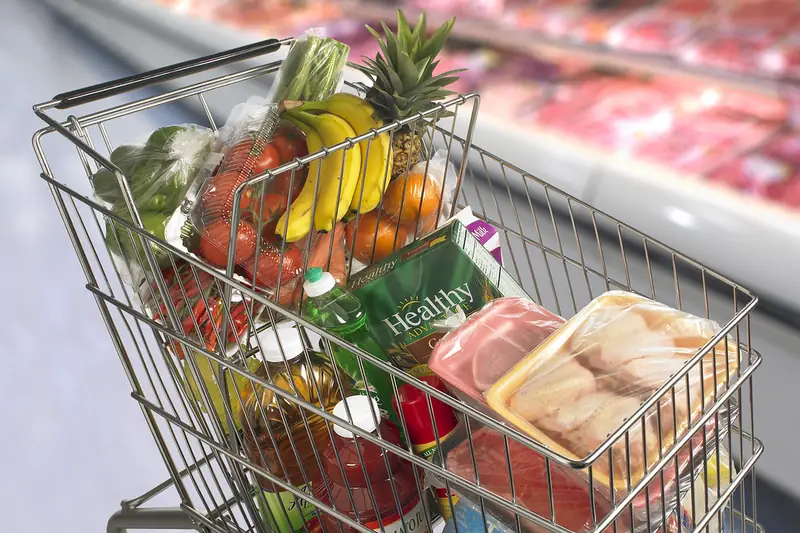
How much should a family of 4 spend on groceries? About $1,393
Photo: USDAgov, Flickr, Domaine public
 Work
1099-NEC threshold 2026: $2,000, and why your invoices matter
Photo: Boston Public Library, Flickr, CC BY 2.0
 Taxes
How much to set aside for 1099 taxes in 2026, by income level
Photo: imglighting, Flickr, CC BY 2.0