Energy bill calculator: work out your bill with price cap rates
An energy bill is the kilowatt hours you use multiplied by the unit rate, plus a standing charge for every day of the period. Under the Ofgem price cap from 1 October to 31 December 2026, a Direct Debit customer pays on average 26.32p per kWh and 54.83p a day for electricity, and 7.97p per kWh and 29.68p a day for gas.
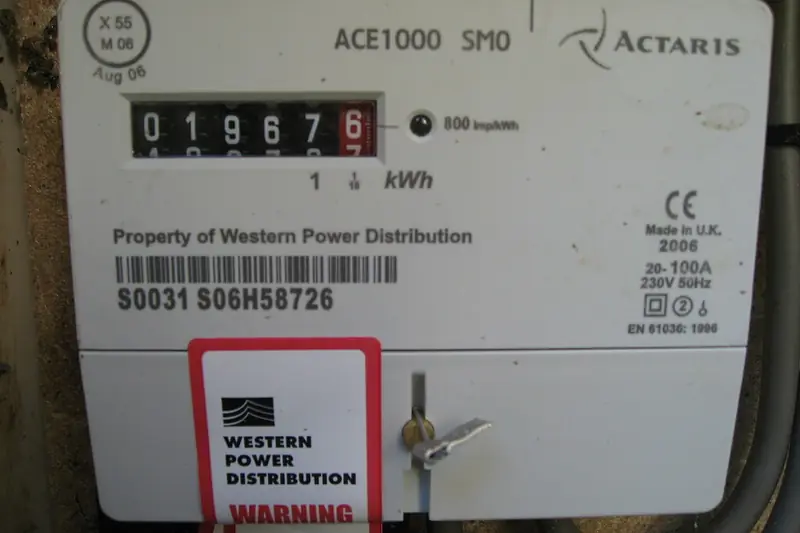
Photo: Kai Hendry, Flickr, CC BY 2.0
The price cap does not limit your total bill. It limits the unit rate and the standing charge your supplier can charge on a default tariff, so the bill still rises with every kWh you use. The rates below are averages for England, Scotland and Wales; yours depend on your region, meter and how you pay. See what your own usage costs at today’s rates.
The formula
Bill = (kWh used × unit rate) + (number of days × standing charge)
Do it once for electricity and once for gas, then add them up. Your kWh figure is on your annual statement, your supplier’s app, or a smart meter display.
Do the sum with my kWhPrice cap rates, 1 October to 31 December 2026
Direct Debit, average across Great Britain, VAT included where it applies:
| Unit rate | Standing charge | |
|---|---|---|
| Electricity (0% VAT) | 26.32p per kWh | 54.83p per day |
| Gas (5% VAT) | 7.97p per kWh | 29.68p per day |
The government removed VAT from household electricity in Great Britain from 1 October 2026, worth about £45 a year to an average household, and the Autumn Budget 2026 extended the cut until July 2027.
Compare my tariff with the capWorked example: a typical dual fuel home
Ofgem’s typical household uses 2,500 kWh of electricity and 9,500 kWh of gas a year.
| Line | Calculation | Cost for a year |
|---|---|---|
| Electricity units | 2,500 × 26.32p | £658.00 |
| Electricity standing charge | 365 × 54.83p | £200.13 |
| Gas units | 9,500 × 7.97p | £757.15 |
| Gas standing charge | 365 × 29.68p | £108.33 |
| Total | £1,723.61 |
£1,723
That is about £144 a month if spread evenly. Real bills are higher in winter and lower in summer, which is why a Direct Debit can look too high in July and too low in January. Find out if you use more or less than the typical home.
Worked example: an all-electric flat
A one-bedroom flat with no gas, using 1,800 kWh a year:
- Units: 1,800 × 26.32p = £473.76
- Standing charge: 365 × 54.83p = £200.13
- Total: £673.89 a year, about £56 a month.
The standing charge is almost a third of this bill. Using less electricity does not touch it, which is why low users feel standing charges the most.
Work out my electricity-only billWorking out one month
The same formula works for any period: use the kWh for that period and the number of days in it. A 31-day winter month in which a home uses 300 kWh of electricity and 1,400 kWh of gas, at the October to December 2026 rates:
| Line | Calculation | Cost |
|---|---|---|
| Electricity units | 300 × 26.32p | £78.96 |
| Electricity standing charge | 31 × 54.83p | £17.00 |
| Gas units | 1,400 × 7.97p | £111.58 |
| Gas standing charge | 31 × 29.68p | £9.20 |
| Month total | £216.74 |
In this month, gas is more than half of the bill (£120.78 of £216.74), so for a gas-heated home the heating is where a winter bill is won or lost. Multiply by your own kWh to check a bill line by line.
How you pay changes the bill
For the same typical use, Ofgem’s cap levels for October to December 2026 are:
| Payment method | Typical yearly bill |
|---|---|
| Direct Debit | £1,723 |
| Prepayment | £1,678 |
| Standard Credit (pay on receipt of bill) | £1,861 |
| Economy 7, Direct Debit (3,400 kWh, electricity only) | £1,046 |
Moving from Standard Credit to Direct Debit is worth about £138 a year at typical use, with no change to how much energy you use.
See what switching payment saves meHelp with bills this winter
- Warm Home Discount: £150 off for households on means-tested benefits.
- Household Energy Payment: £100 for households in Council Tax bands A to D in England, paid from January 2027, announced at the Autumn Budget 2026.
- Gas standing charges: the government has asked Ofgem to remove them from gas bills, as early as 2027.
Four checks before January
- Read your actual kWh from the last 12 months, not an estimate. Submit a meter reading if your bills are estimated.
- Check your tariff name. If it is a "standard variable" or default tariff, the price cap applies: your supplier cannot charge more than the cap rates for your region and payment method.
- Compare any fixed deal against the cap using the formula above, with your own kWh, for both unit rate and standing charge.
- Check your payment method. Standard Credit costs more than Direct Debit for the same energy.
Frequently asked questions
How do I calculate my electricity bill?
Multiply the kWh you used by your unit rate, then add the standing charge multiplied by the number of days. At the October to December 2026 cap rates for Direct Debit, 2,500 kWh a year costs about £658 in units plus £200 in standing charges, about £858.
What is the average energy bill in the UK right now?
Ofgem’s typical figure for 1 October to 31 December 2026 is £1,723 a year for a dual fuel household paying by Direct Debit, based on 2,500 kWh of electricity and 9,500 kWh of gas. Standard Credit is £1,861 and prepayment £1,678 for the same use.
When does the energy price cap change next?
Ofgem reviews the cap every three months. The level for 1 January to 31 March 2027 is due to be announced on 25 November 2026. The rates in this guide apply until 31 December 2026.
Is there VAT on electricity bills in 2026?
Not in Great Britain from 1 October 2026: the government cut VAT on household electricity from 5% to zero, and the Autumn Budget 2026 extended the cut until July 2027. Gas bills still carry 5% VAT.
Sources
- Changes to energy price cap between 1 October and 31 December 2026, Ofgem, accessed 21 November 2026
- Summary of changes to energy price cap 1 October to 31 December 2026, Ofgem (26 August 2026), accessed 21 November 2026
- Energy price cap, Ofgem, accessed 21 November 2026
- What the Autumn Budget 2026 means for your energy bills, Department for Energy Security and Net Zero, accessed 21 November 2026
Read next
 Home and energy
How long does a landlord have to return a deposit? 10 days
Photo: danxoneil, Flickr, CC BY 2.0
 Home and energy
Stamp duty first time buyer: £0 up to £300,000, then 5%
Photo: wilhei55, Flickr, CC BY 2.0
 Students
16-25 Railcard: is it worth it? It pays off after £105 of fares
Photo: Horia Varlan, Flickr, CC BY 2.0