Solar tax credit 2026: ended for systems installed after 2025
There is no federal residential solar tax credit for a system installed in 2026: the IRS says the 30% Residential Clean Energy Credit is not available for any property placed in service after December 31, 2025. Solar can still pay off on electricity savings alone, but the payback takes longer, so the numbers for your own roof matter more than before.
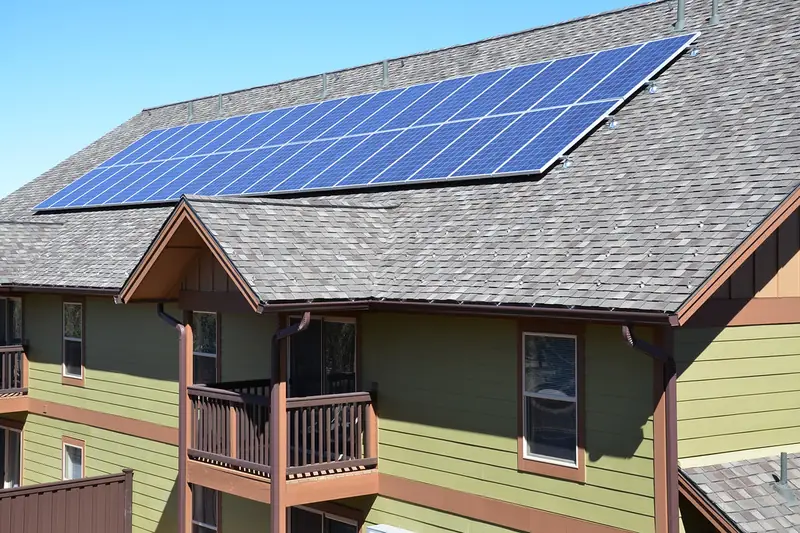
Photo: Grand Canyon NPS, Flickr, CC BY 2.0
The credit was a 30% discount paid through your tax return. Without it, the case for solar rests on how much electricity your roof produces and what that electricity would have cost you. Check whether solar still pays off at your address.
What ended, and when
| Installed 2022 to 2025 | Installed in 2026 | |
|---|---|---|
| Federal Residential Clean Energy Credit | 30% of the cost | none |
| Battery storage (3 kWh or more, from 2023) | 30% | none |
| Form to file | Form 5695 | not applicable |
Dec 31, 2025
The date that counts is installation, not purchase: the IRS says you claim the credit for the year the property is installed. A contract signed in 2025 for a system completed in 2026 does not qualify. Find out how the change affects your project.
Check if solar pays off without the creditIf your system went in during 2025
You can still claim it. File Form 5695 with your 2025 return. The credit is nonrefundable, so it cannot exceed your tax for the year, but any unused amount can be carried forward to later years. A $20,000 system installed in 2025 gives a $6,000 credit; if your 2025 tax is only $4,000, the other $2,000 carries forward. Work out how much credit you still have to use.
Calculate my remaining creditWhat solar saves in 2026, without the credit
Two numbers drive the saving: what a system produces and what your power costs. The EIA puts the U.S. average residential price at 18.16 cents per kWh in August 2026, against 17.57 cents a year earlier, with large gaps between states.
| Location, 7 kW system | Yearly production (PVGIS) | Residential price, August 2026 | Value if it replaces bought power |
|---|---|---|---|
| Los Angeles, California | 12,472 kWh | 29.75 cents | about $3,710 |
| New York City, New York | 9,833 kWh | 28.65 cents | about $2,817 |
| New York production at the U.S. average price | 9,833 kWh | 18.16 cents | about $1,786 |
These values assume every kWh you produce replaces one you would have bought at that average price. Power you export to the grid may be credited at a different rate from the one you pay, depending on your utility, so the share you use yourself matters. See what your production is worth at your utility’s price.
Value my solar at my electricity rateTwo lessons from the table. First, the same panels produce about 27% more in Los Angeles than in New York City, so location changes the result as much as price. Second, the price you avoid is not fixed: the U.S. average residential price rose about 3.4% between August 2025 and August 2026. A system lasts for many years, so a payback worked out on today’s price will be shorter if prices keep rising, and longer if they fall. Running the numbers at two or three price levels gives a more honest range than a single figure on an installer’s brochure.
Payback with and without the credit
Take a system costing $20,000, an example figure: use the quotes you receive.
| Location | Yearly saving | Payback without credit | Payback with the old 30% credit |
|---|---|---|---|
| Los Angeles | $3,710 | about 5.4 years | about 3.8 years |
| New York City | $2,817 | about 7.1 years | about 5.0 years |
| At the U.S. average price | $1,786 | about 11.2 years | about 7.8 years |
The end of the credit adds roughly two to three and a half years to the payback in these examples. A cheaper quote shortens it in exactly the same proportion: a system bought for $14,000 pays back as fast today as a $20,000 system did with the credit. Test your quote against your payback.
Test my installer’s quoteWhat to do now
- Get at least two quotes and compare the price per watt, since the credit no longer hides an expensive offer.
- Ask your utility how exported power is credited and use that rate for the share you will not use yourself.
- Look for state and local incentives, which are separate from the federal credit.
- Size the system to your use, not only to your roof, if exports are credited at less than your price.
- Keep your 2025 paperwork if your system was installed then, to claim or carry forward the credit.
Get the full payback for your home before signing.
Get my solar payback planFrequently asked questions
Is there a solar tax credit in 2026?
Not for homeowners. The federal Residential Clean Energy Credit of 30% does not apply to property placed in service after December 31, 2025. State and local incentives may still exist, so check your state and utility.
If my solar panels were installed in 2025, can I still claim the credit?
Yes. The credit is claimed for the tax year in which the property was installed, so a system placed in service in 2025 is claimed on your 2025 return with Form 5695. Unused credit can be carried forward to later years.
Does the end of the credit apply to batteries too?
Yes. Battery storage of at least 3 kWh was eligible from 2023 under the same credit, which ended for property placed in service after December 31, 2025.
Is solar still worth it without the tax credit?
It depends on your power price, your production and the price you pay for the system. At California’s August 2026 average residential price of 29.75 cents per kWh, a 7 kW system near Los Angeles could save about $3,700 a year if it replaces bought electricity.
Sources
- IRS, Residential Clean Energy Credit, accessed November 22, 2026
- U.S. Energy Information Administration, Electric Power Monthly, Table 5.6.A, Average price of electricity to ultimate customers by end-use sector, by state, accessed November 22, 2026
- European Commission Joint Research Centre, PVGIS 5.3 (photovoltaic production estimates), accessed November 22, 2026
Read next
 Home and energy
Refinance break-even calculator: when a refi pays for itself
Photo: Muffet, Flickr, CC BY 2.0
 Home and energy
Rental property depreciation: 27.5 years and what it saves you
Photo: puroticorico, Flickr, CC BY 2.0
 Work
1099-NEC threshold 2026: $2,000, and why your invoices matter
Photo: Boston Public Library, Flickr, CC BY 2.0